If you are dreaming about a mountain cabin near Burnsville, the view is only part of the story. In Yancey County, a beautiful parcel can feel completely different once you factor in sun, slope, drainage, access, and septic potential. If you want to buy with confidence, it helps to know what to study before you fall in love with a listing. Let’s dive in.
Why land choice matters near Burnsville
Burnsville sits in a true mountain setting shaped by steep terrain, forest cover, and big elevation changes. With Mount Mitchell State Park in Yancey County and the area’s rugged topography, the way a lot lays on the land can affect daily comfort, building costs, and long-term enjoyment.
For many cabin buyers, the most important question is not just how many acres a parcel has. It is whether the site can comfortably support the kind of cabin experience you actually want, from sunlight on the porch to practical driveway access in every season.
Start with the cabin experience
Before you compare parcels, think about how you want the property to live. A mountain cabin can be bright and open, tucked into shade, easy to reach, or more remote than it first appears online.
That is why site qualities matter so much in the Burnsville area. Two lots with similar views can offer very different living experiences depending on orientation, moisture, and where a buildable area actually exists.
Sun exposure changes comfort
If you want a cabin that feels warm and bright in cooler months, pay close attention to orientation. The U.S. Department of Energy notes that south-facing windows capture the most winter sunlight, and glazing generally performs best when oriented within 30 degrees of true south.
That does not mean every cabin must face one exact direction. It does mean a sunny homesite may feel more comfortable and energy-efficient than a parcel that stays heavily shaded through much of the day.
Aspect affects moisture and feel
In mountain terrain, the direction a slope faces can change the character of the land. NC State Extension notes that north- and northeast-facing coves are often moister, while southwest-facing upper slopes tend to be drier and more exposed to sun and wind.
For you as a buyer, that translates into lifestyle questions. Do you want a cool, shaded setting with a tucked-away feel, or a sunnier ridge or bench that may feel lighter and drier year-round?
Look past acreage to usable building area
A large parcel can still have a small practical building zone. In mountain country, the real question is where the house pad, driveway, septic field, and required repair area can go.
NC State Extension explains that water naturally collects in hollows, gullies, dips, and at the foot of slopes. It also notes that steep slopes are harder to work with and can complicate both site preparation and access.
Drainage can make or break a homesite
A lot may photograph beautifully and still have weak drainage. Good sites need to drain well both on the surface and through the soil profile.
If water tends to collect where the cabin or septic would need to go, that can create real design and permitting challenges. This is one reason mountain land often needs more study than buyers expect at first glance.
Driveway layout matters early
On mountain parcels, driveway design is not a minor detail. It can influence how easily you reach the cabin, how emergency vehicles access the site, and whether the build plan works at all.
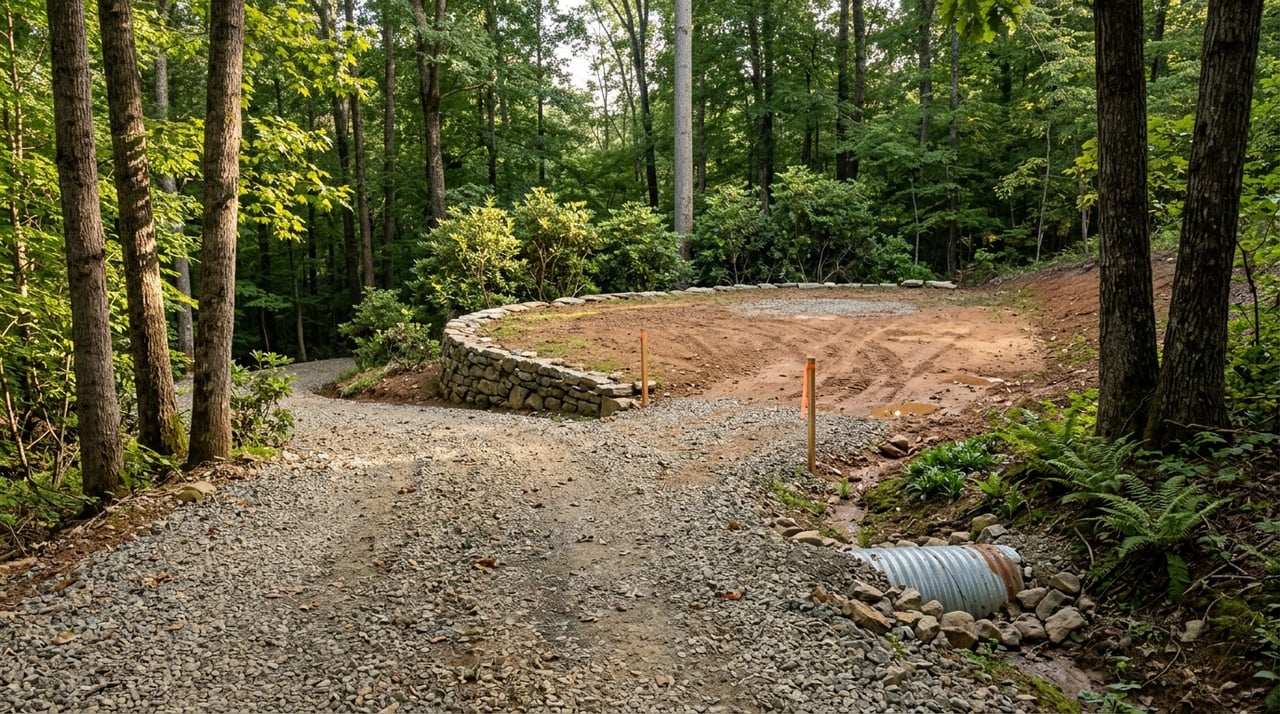
If the lot has a stream crossing, bridge, culvert, or a very steep approach, those features deserve close review before you assume the site is straightforward.
Wildfire and emergency access deserve attention
Wooded mountain parcels often sit in the wildland/urban interface. The North Carolina Forest Service notes that these homes can be harder to protect and recommends defensible space around the home ignition zone.
Its guidance includes removing combustible materials within roughly 30 feet of the house and keeping roofs, gutters, decks, and fence lines clear of debris. For buyers, this means the best cabin site is not only scenic, but also practical to maintain safely.
Access standards are part of the decision
The North Carolina Forest Service also recommends a driveway at least 12 feet wide with 15 feet of vertical clearance and a slope of less than 5 percent for emergency access. Even if a parcel feels private and peaceful, access still needs to work for service vehicles and first responders.
This is especially important when you are evaluating raw land. A lot may technically have frontage or a road cut, but still require careful planning to create safe, functional access.
How to evaluate a parcel from afar
Many Burnsville-area land buyers start online, especially if they are coming from outside western North Carolina. That can work well for early screening, but remote research should be the beginning of due diligence, not the end.
Use Yancey County GIS as a first filter
Yancey County’s GIS system includes parcels, street centerlines, surface water, elevations, contours, and aerial imagery. That makes it helpful for spotting steep topography, possible stream corridors, road patterns, and general site layout.
The county also makes clear that GIS information should be verified before you rely on it for decisions. In plain terms, GIS is useful for narrowing your list, but it does not replace site visits and local review.
Check soils before you commit
Septic feasibility is one of the most important land questions in this market. NC State Extension recommends checking soil types early and advises buyers to seek an improvement permit before purchasing a lot intended for a home.
That matters because the same parcel can include both suitable and unsuitable soils. A lot that looks perfect on a map may still have limited septic options in the area where you want to build.
Review restrictions and access
Yancey County’s permit checklist states that deed and covenant restrictions are not enforced by county officials. That means you need to review restrictions yourself or have them reviewed on your behalf early in the process.
The same checklist also notes that bridges and culverts must be suitable for emergency vehicles. If a property connects to a state-maintained road, NCDOT says a driveway permit is required when developing property, changing use, or altering access.
Understand Burnsville and Yancey County rules
One of the first things to confirm is which jurisdiction controls the parcel. This matters because the path to building can differ depending on whether the property is inside Burnsville town limits or in the county.
Town versus county jurisdiction
Yancey County states that there is no zoning ordinance in the county’s jurisdiction outside Burnsville town limits. Burnsville’s zoning ordinance applies within the town’s corporate limits.
A parcel just outside town may therefore follow a different regulatory path than one inside town. This distinction is simple, but it can affect what you need to verify before moving forward.
Follow the county’s approval order
Yancey County Building Inspections says new structures, including houses, garages, and shops, require permits. The county’s checklist lays out the general order: confirm jurisdiction, obtain floodplain or watershed permits if needed, obtain septic and well permits, request the 911 address, and then apply for the building permit.
For out-of-area buyers, this sequence is useful because it shows why a parcel described as buildable may still require several approvals before construction can begin.
Floodplain and watershed issues can affect the plan
If a parcel is in a mapped flood hazard area or the Yancey Watershed, the county says permits are required before work begins. That is especially relevant for mountain land with creeks, low areas, or building sites near water.
In practice, this means you should not assume a streamside area or gently sloped lower section is automatically the best cabin location. The site plan may need to shift based on permitting and access realities.
Water, septic, and utilities need early review
In mountain land transactions, utility due diligence often decides whether a parcel is a fit. For many buyers, septic suitability is the first major hurdle.
Septic is often the key issue
NC State Extension notes that many North Carolina soils are unsuitable for conventional septic systems, even on a one-acre lot. It advises buyers to obtain an improvement permit before purchase because the local environmental health specialist determines whether the site can support a septic system and what kind of system may be needed.
Lot size alone does not answer the question. Bedroom count, topography, soil type, and layout all affect drainfield size and placement.
Wells need proper siting and testing
Private wells have their own permitting and siting requirements. Extension guidance says wells should be located to avoid flooding and surface-water runoff and should be separated from septic systems and drainfields.
NC DHHS also states that all newly constructed private drinking water wells in North Carolina must be tested within 30 days of completion. Because private well owners are responsible for monitoring water quality, well planning and testing should be part of your early due diligence.
Municipal service should be confirmed early
Some parcels may tie into public water or sewer, while others will not. Yancey County’s building guidance says applicants need sewer approval and water approval, if applicable, from the county health department and or the Town of Burnsville.
If utility service is important to your cabin plans, verify that before you build your expectations around a parcel.
Build your local team early
The right guidance can save you time, money, and frustration. For mountain land near Burnsville, the most helpful early conversations are often with professionals who understand the terrain, local approval process, and site constraints.
Useful contacts may include a local broker, a surveyor, the county health department, a licensed builder, and, when needed, a well contractor or soil professional. The goal is simple: confirm how the land works before you design the dream around it.
A smart way to compare cabin lots
When you are looking at several parcels, it helps to compare them through the same lens. A practical checklist can keep emotion from outrunning due diligence.
Consider these questions as you narrow your options:
- How much winter sun does the homesite appear to get?
- Does the slope orientation suggest a drier ridge, a shaded cove, or something in between?
- Where could the cabin pad, septic field, and repair area realistically fit?
- Does the property appear to have manageable drainage?
- Is driveway access practical for everyday use and emergency vehicles?
- Are there floodplain, watershed, bridge, or culvert concerns?
- Is the parcel inside Burnsville town limits or in unincorporated Yancey County?
- Have you verified deed restrictions, legal access, and utility options?
- Can you secure septic and well approvals that match your intended cabin size?
Buying mountain land with more confidence
The right cabin parcel near Burnsville should do more than impress you in listing photos. It should support the way you want to live, build, and care for the property over time.
That is where local knowledge matters. When you understand the land’s orientation, drainage, access, permitting path, and utility feasibility, you can make a more confident decision and avoid costly surprises later.
If you are considering land for a mountain cabin near Burnsville and want a thoughtful, ground-level perspective on what makes a parcel work, connect with Kim Gentry Justus at Christie's International Real Estate for a curated consultation.
FAQs
What should you check first when buying land for a cabin near Burnsville?
- Start with usable building area, septic potential, access, slope, drainage, and whether the parcel is inside Burnsville town limits or in unincorporated Yancey County.
Why is septic so important for mountain land in Yancey County?
- Septic suitability can determine whether a lot is truly buildable, and NC State Extension recommends seeking an improvement permit before purchase.
How can you research Burnsville-area land if you live out of town?
- Use Yancey County GIS to screen parcels for contours, water features, and access patterns, then verify everything through on-site review and local professionals.
Is there zoning on land near Burnsville, North Carolina?
- Yancey County says there is no zoning ordinance outside Burnsville town limits, while parcels inside Burnsville are subject to the town’s zoning ordinance.
What makes a mountain cabin lot feel better over time?
- Lots that balance sun exposure, drainage, safe access, wildfire defensibility, and realistic utility placement often provide a more comfortable and functional cabin experience.