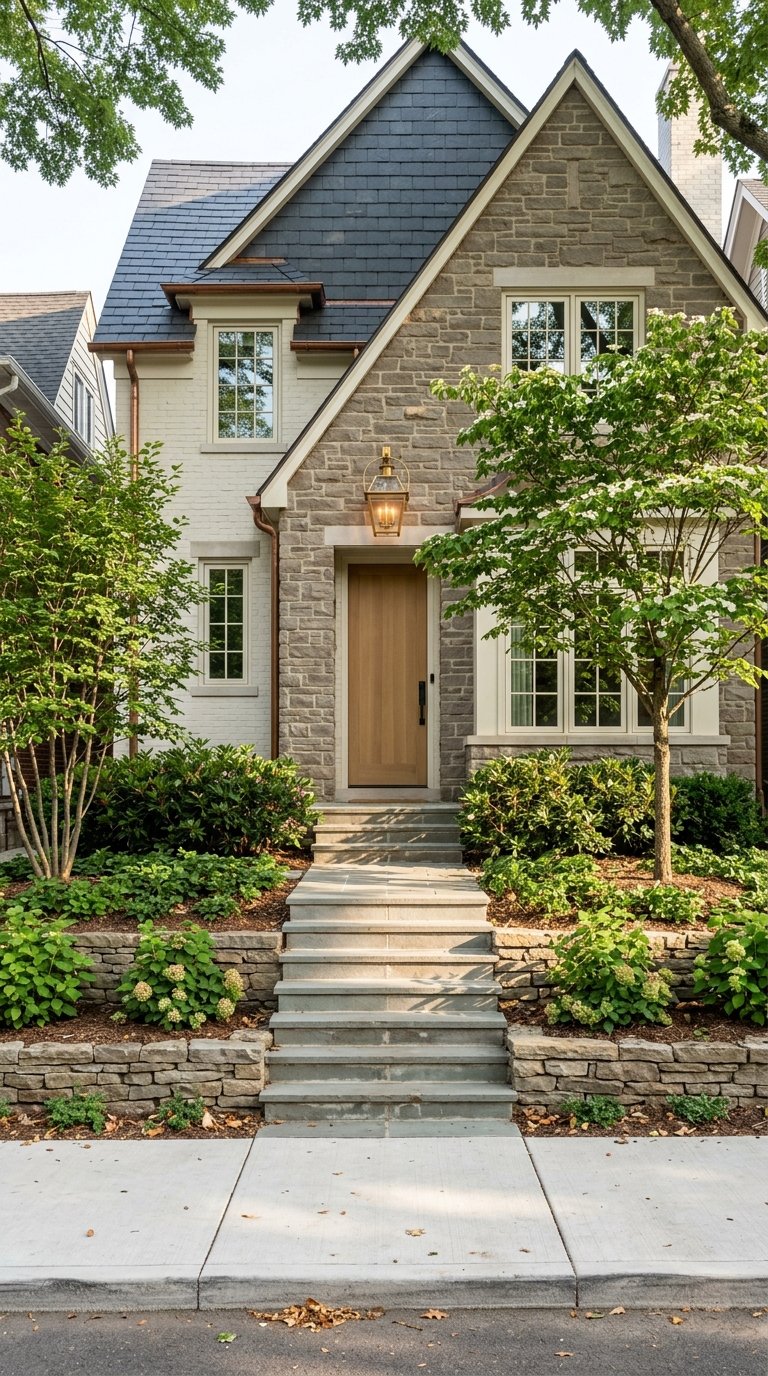
If you are drawn to Waynesville, one of the first choices you may face is not whether to live in the mountains, but how you want to experience them. In this market, the real contrast is often between life near the historic town core and life on the surrounding hillsides, ridges, or acreage tracts. Each offers a distinct rhythm, and understanding that difference can help you narrow your search with confidence. Let’s dive in.
What in-town and mountain-side mean in Waynesville
Waynesville is not a simple town-versus-country comparison. The downtown historic district sits in the center of town, covers about three blocks and roughly 13 acres, and remains an intact commercial streetscape with late-19th- to mid-20th-century buildings.
That means in-town living usually centers on Main Street and the nearby residential blocks. Mountain-side living usually refers to homes on slopes, ridges, and wooded settings beyond the core, where privacy, elevation, and land shape daily life more directly.
There is also an important local nuance. In-town Waynesville is still hilly. The historic district sits at the crest of a hill, with the ground dropping off to the east and west, so the comparison is less about flat versus steep and more about walkable core versus more secluded hillside setting.
In-town Waynesville: walkable and connected
If you want to step outside and feel close to the pulse of town, in-town Waynesville has a clear appeal. Local sources describe downtown as a walkable district with shops, galleries, cafés, restaurants, public art, historic buildings, and events throughout the year.
Main Street is especially attractive if you value low-friction daily life. Fine shops, galleries, cafés, and restaurants are all within walking distance along tree-lined brick sidewalks, which can make errands, coffee runs, and casual evenings out feel easy and spontaneous.
The town also points residents toward nearby services, including Haywood Regional Medical Center. For many buyers, that makes in-town living a practical fit when convenience matters as much as character.
What daily life feels like in town
Living near downtown often means you can do more without getting in the car. You may still drive for many needs, but the option to walk to dining, shopping, or events can change the pace of your week in a meaningful way.
This setting can also feel more connected and neighborhood-oriented. Because the area developed over time around the historic core, nearby homes often sit within more established streetscapes and smaller lot patterns than what you typically find higher up the mountain.
Mountain-side Waynesville: privacy, views, and space
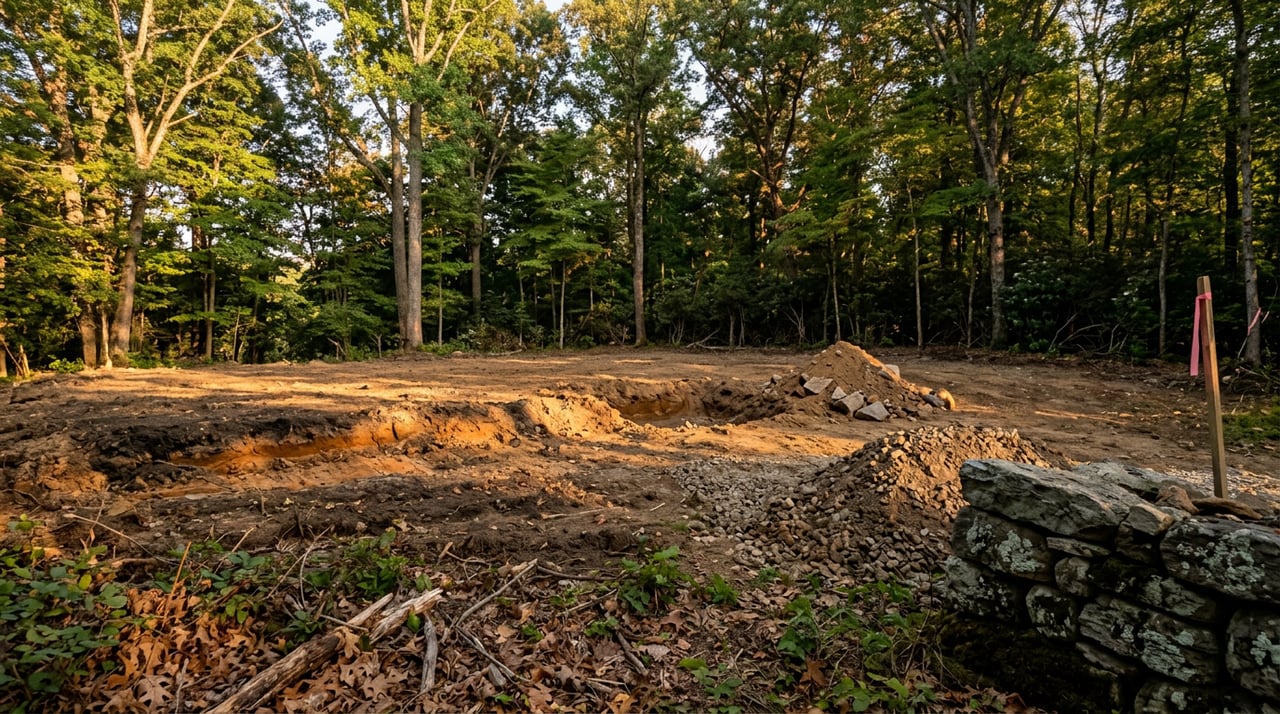
If your vision of mountain living includes a winding drive, wooded surroundings, and layered ridgeline views, mountain-side living may be the better fit. In Waynesville, homes outside the core often trade quick walkability for a stronger sense of privacy and separation.
That trade-off is part of the appeal. These properties are commonly shaped by terrain, which often means homes are positioned to take advantage of views, natural contours, and larger sites.
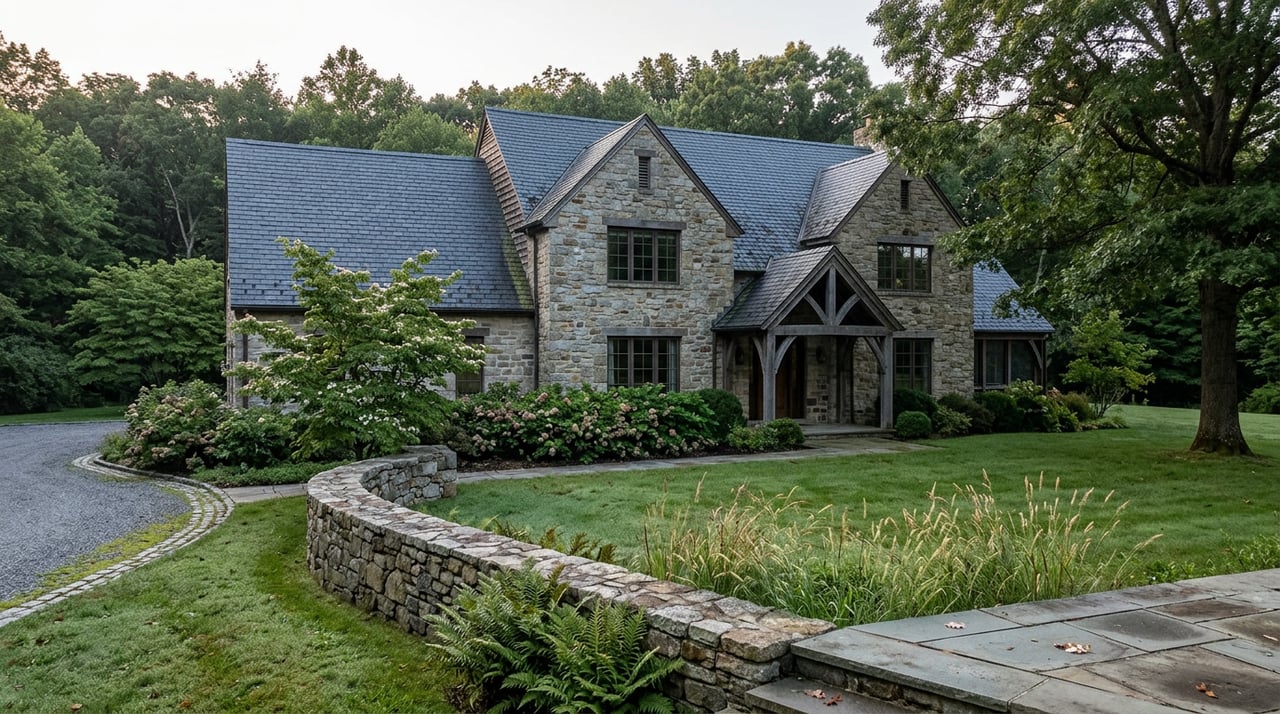
Regional mountain-home patterns also support that expectation. In Western North Carolina, mountain-side homes are often log, timber, or hybrid-frame designs with wood, stone, or metal finishes, large windows, porches, decks, and open layouts that connect the house to the landscape.
What daily life feels like on the mountain
Mountain-side living is often more car-dependent, even when the mileage to town looks short on paper. Curvy roads, steep grades, and elevation changes can make a quick trip feel longer than expected.
For many buyers, that is well worth it. You may gain a quieter setting, more acreage, more wooded separation, and the kind of long-range views that define the Western North Carolina lifestyle.
Convenience and commuting
One of the clearest differences between these two settings is how you move through your day. In-town living tends to support easier errands and simpler access to Waynesville’s central amenities, while mountain-side living usually requires more planning around the car.
When you need to connect to the wider region, U.S. 23/74 and Russ Avenue are key corridors. NCDOT describes Russ Avenue as a major thoroughfare with access to the Great Smoky Mountains Expressway and a north-south link between Waynesville and Maggie Valley.
For buyers who commute or travel often, road access matters as much as distance. A home that feels peaceful and tucked away may also require a bit more effort to reach in every season.
Winter access matters more than you think
Waynesville’s mountain setting is part of its charm, but it also affects how a property functions. The town lists an elevation of 2,713 feet, with annual rainfall of 47.5 inches and annual snowfall of 12.2 inches, and local weather is clearly shaped by mountain elevation.
That does not mean winter is difficult everywhere in the same way. The bigger question is often access, not just snowfall totals.
The town’s snow-removal policy offers an important clue. Public works pre-treats priority roads, bridges, and steep grades with brine or salt, state highways are plowed by NCDOT, and the town is not responsible for private roads and driveways.
Questions to ask on a hillside property
If you are considering mountain-side living, pay close attention to practical details such as:
- Whether the road is public or private
- How steep the driveway is
- How much shade the property gets in winter
- How drainage moves across the site
- Whether curves and grades could affect access in icy conditions
These points matter in town too, but they tend to matter more on hillside and ridge properties. A beautiful setting should also be a workable setting for your day-to-day life.
Home styles and lot patterns
Your lifestyle is only part of the equation. The style of home you want may also point you toward one setting over the other.
In and around town, Waynesville’s architecture reflects its long history. Local design guidelines identify Queen Anne, Colonial Revival, Craftsman/Bungalow, Tudor Revival, Ranch, Mid-Century Modern, and Minimal Traditional styles in the area, while the downtown historic district is dominated by one- to three-story brick commercial buildings with a classic commercial character.
That gives in-town living a more established architectural feel. Nearby residential areas often read as older, more layered, and more closely tied to the historic pattern of the town.
Mountain-side homes often feel different in both form and setting. They are more likely to be view-oriented, more tucked into the terrain, and more shaped by privacy, decks, porches, and the relationship between the house and the land.
Which setting fits your priorities?
Neither option is better across the board. The right choice depends on how you want your home to support your everyday routine.
In-town Waynesville may be the better fit if you want:
- Walkable access to Main Street amenities
- Easier errands and evening outings
- Established streets and historic character
- A more connected neighborhood feel
Mountain-side Waynesville may be the better fit if you want:
- More privacy
- Larger lots or acreage
- Layered mountain views
- A home shaped around terrain and natural setting
For some buyers, the answer is immediate. For others, it helps to tour both settings and notice what feels natural to you. One may suit your current lifestyle, while the other may better match how you want to live in the years ahead.
The value of local guidance
In Waynesville, small details can have a big impact on how a property lives. Two homes may be similar in square footage, but feel completely different because of road access, slope, lot shape, proximity to Main Street, or how the house sits within the landscape.
That is why local context matters. Understanding terrain, setting, and the practical trade-offs between convenience and privacy can help you focus on homes that truly match your goals, rather than just your search filters.
If you are weighing in-town convenience against mountain-side privacy in Waynesville, Kim Gentry Justus at Christie's International Real Estate can help you compare properties with a clear eye for setting, lifestyle, and long-term fit.
FAQs
What does in-town living in Waynesville usually mean?
- In-town living usually refers to homes near Main Street and the adjacent streets around Waynesville’s historic core, where shops, galleries, cafés, restaurants, and events are close by.
What does mountain-side living in Waynesville usually mean?
- Mountain-side living usually refers to homes on slopes, ridges, or wooded settings outside the town core, where privacy, views, and space are often bigger priorities.
Is downtown Waynesville walkable for daily errands?
- Downtown Waynesville has a clear walkability advantage, with shops, galleries, cafés, and restaurants within walking distance along Main Street’s tree-lined brick sidewalks.
Does winter affect mountain-side homes in Waynesville differently?
- Yes. Access, steep grades, driveway slope, drainage, and whether a road is public or private can matter more on hillside properties, especially during snow or ice.
What types of homes are common near downtown Waynesville?
- Homes near downtown often reflect established architectural styles such as Craftsman/Bungalow, Colonial Revival, Ranch, Tudor Revival, Mid-Century Modern, and other historic or traditional patterns.
What types of homes are common on the mountain side of Waynesville?
- Mountain-side homes are often designed around terrain and views, with features such as large windows, decks, porches, open layouts, and materials like wood, stone, or metal.
Which Waynesville setting is better for privacy and acreage?
- Mountain-side properties are generally the better fit for buyers who prioritize privacy, wooded surroundings, and larger tracts of land.
Which Waynesville setting is better for convenience and easy access?
- In-town Waynesville is usually the better fit for buyers who want simpler errands, easier access to Main Street, and a more connected daily routine.