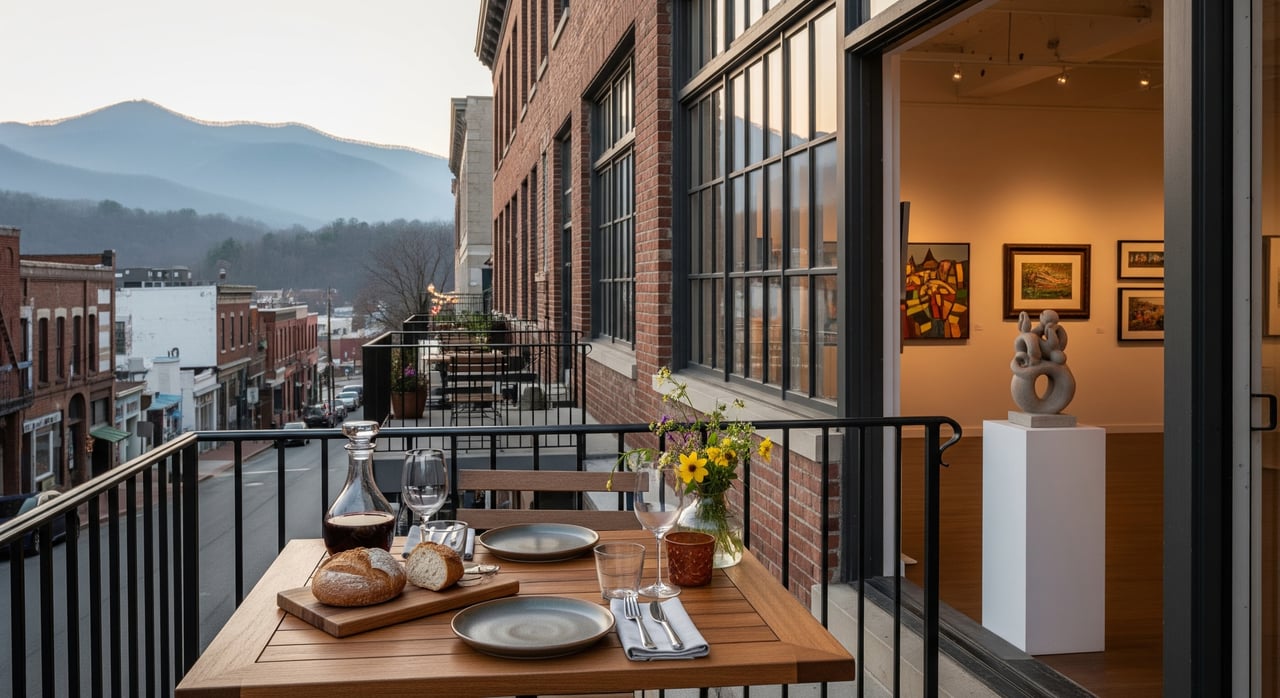
Do you plan trips around gallery openings and new tasting menus? If so, Asheville might feel like home the moment you arrive. You want easy access to studios, chef-driven dining, and live music without giving up comfort and neighborhood charm. In this guide, you’ll see how the city’s core areas compare for food and arts, plus practical tips to help you find the right fit for your lifestyle. Let’s dive in.
How Asheville feeds your creative life
Asheville is widely known for its arts and culinary culture, highlighted by tourism and arts groups like Visit Asheville. For a small city, the creative footprint is large, with galleries, studios, breweries, and venues clustered in a few in-town districts. The city counted 94,589 residents in the 2020 census, so you enjoy a lively scene without big-city scale, according to U.S. Census QuickFacts.
Two anchors help shape the downtown arts experience. The Asheville Art Museum brings exhibitions and programs to Pack Square, which supports nearby restaurants and shops. Along the river, the River Arts District concentrates working artist studios in converted warehouses, with cafés and taprooms sprinkled throughout.
Neighborhood guide for food and arts lovers
Downtown and Pack Square
Downtown is your most walkable option for daily dining, galleries, and music. You’ll find condos and apartments in historic buildings, plus newer mixed-use properties near Pack Square and the Grove Arcade. Expect steady daytime energy and late-night activity, especially on weekends.
Dining is dense, from fine dining to casual cafés and bakeries. Commercial galleries dot the streets, and the Asheville Art Museum anchors the visual-arts scene. Live music ranges from intimate rooms to full venues, with nightlife centered around the core blocks.
Practical notes: Parking is limited and often metered, though walkability is high. Downtown events and information are organized by the Asheville Downtown Association. If you value a quieter evening, explore nearby residential districts and compare noise levels at different times.
South Slope
Just south of downtown, South Slope blends converted industrial buildings with new residential options like lofts and townhomes. It has a strong brewery and taproom culture, with casual restaurants built around those hubs. The vibe is energetic in the evenings.
You’ll see creative businesses mixed with food and drink spots rather than a classic gallery row. Live music often pops up in brewery spaces and medium rooms, with outdoor beer gardens activating on pleasant nights. If you want in-town living with a craft-beer focus, South Slope puts you close to the action.
Practical notes: Construction and redevelopment are common, so traffic and parking patterns can shift. Walk the area in both daytime and evening to understand how crowds and noise feel on your block.
River Arts District (RAD)
The River Arts District is the city’s working studio hub along the river, with former warehouses transformed into creative spaces. You’ll find some residential lofts and conversions, but it functions primarily as an arts and production district. Foot traffic spikes during studio events and weekends.
Dining here is destination-style, with cafés, specialty food spots, and taprooms rather than tightly packed restaurant blocks. The arts are the headline: studios and galleries showcase ceramics, glass, metal, woodworking, and more, often with open studio hours announced on the RAD website. Nightlife is quieter than downtown, though some venues host occasional shows.
Practical notes: Parts of RAD remain industrial, so expect freight or light industry nearby. Recent years brought expanded bike and pedestrian paths, and parking varies by building and event.
West Asheville (Haywood Road)
West Asheville centers on Haywood Road, an eclectic corridor lined with local restaurants, bakeries, cafés, and indie shops. The housing mix includes historic bungalows, craftsman homes, and duplexes on leafy side streets. The pace feels neighborhood-oriented, with a strong local following.
Dining leans local and chef-driven, with a comfortable spread of casual and date-night options. You’ll find small galleries, maker shops, and pop-up arts events throughout the year. Live music skews intimate, with neighborhood bars and smaller venues balancing early dinners and later sets.
Practical notes: Walkability is strong along Haywood, though parking can vary by block. Explore the side streets for quieter residential options with quick access to the corridor’s restaurants and venues.
Montford Historic District and Grove Park area
Montford and the Grove Park area offer historic architecture and tree-lined streets near the city center. Homes are primarily single-family, with some apartments in converted houses. You can walk or take a short drive to downtown dining, galleries, and events.
Dining within the neighborhoods is more limited, but you are minutes from downtown and West Asheville. The arts presence is subtle and residential, with quick access to museum and gallery programming downtown. Evenings feel calmer compared with the nightlife cores.
Practical notes: If you love historic character and easy downtown access without late-night crowds, this area is a strong fit. As with any historic district, compare property types and note guidelines that may apply to renovations.
Biltmore Village, East, and North Asheville fringe
Biltmore Village is a small, historic commercial node near the Biltmore Estate, surrounded by established residential areas. The feel is curated and upscale, with boutique shops and destination dining. Larger historic homes and suburban-style pockets sit nearby in East and North Asheville fringe areas.
Dining here skews refined, and the evenings are quieter than downtown. Galleries and artisan retail are boutique in scale and benefit from visitor traffic tied to the estate and hotels. You are close to downtown by car while enjoying a calm home base.
Practical notes: If you want an in-town address with quieter evenings and higher-end dining, this area delivers. Inventory varies by block, from classic homes on larger lots to newer infill.
Choosing your fit
Use these quick cues to match your lifestyle:
- Choose Downtown if you want maximum walkability to restaurants, galleries, and music most nights of the week.
- Choose South Slope if craft breweries and a lively evening scene are your priority, with in-town proximity to downtown.
- Choose RAD if your days revolve around studio visits, maker culture, and a creative work environment.
- Choose West Asheville if you want a neighborhood feel with indie dining, small venues, and local shops.
- Choose Montford or Grove Park if you want historic architecture and calmer evenings near downtown amenities.
- Choose Biltmore Village and adjacent areas if you prefer boutique shopping, upscale dining, and a quieter in-town base.
Practical tips before you buy
Visit each neighborhood at different times to gauge energy, parking, and noise. Friday or Saturday evenings can feel very different from weekday afternoons. Check city resources for transit and parking details through the City of Asheville, including ART bus routes and public lots.
Keep an eye on seasonal patterns. Spring through fall brings more visitors, outdoor dining, and event weekends that change traffic and parking demand. For downtown happenings and neighborhood updates, the Asheville Downtown Association is a helpful resource. For citywide arts, food, and event overviews, start with Visit Asheville.
If schools or parks matter to your decision, note how boundaries and park access vary by neighborhood. You can review community services and county resources through Buncombe County. Always verify neighborhood details in person and review any HOA or historic-district guidelines that may affect property plans.
Work with a local advisor
You deserve a curated, low-stress search that fits your taste and timeline. With deep local roots, design-forward presentation, and high-touch service, our boutique approach helps you compare homes by neighborhood vibe, dining access, studio proximity, and daily commute. For private previews and a thoughtful plan tailored to your move, connect with Kim Gentry Justus at Christie's International Real Estate.
FAQs
What makes Asheville stand out for arts and food?
- A dense mix of galleries, studios, and restaurants relative to city size, supported by anchors like the Asheville Art Museum and the River Arts District, as highlighted by Visit Asheville.
Which Asheville neighborhoods are most walkable for dining and music?
- Downtown and the Haywood Road corridor in West Asheville are the most consistently walkable for daily dining and nightlife, with South Slope offering a concentrated brewery scene.
Where can I visit working artist studios?
- The River Arts District is the primary hub for working studios, with open studio events and dozens of makers in converted industrial spaces.
Is nightlife noise a concern in central neighborhoods?
- Expect more evening activity in Downtown, South Slope, and parts of West Asheville; visit at night to compare noise levels, and consider quieter options like Montford or Biltmore Village.
How can I check transit and parking before moving?
- Review ART bus routes, public lots, and parking updates on the City of Asheville website before touring homes and during your due diligence.
What is Asheville’s city population?
- The 2020 city population was 94,589, based on U.S. Census QuickFacts, which provides the most recent published data.