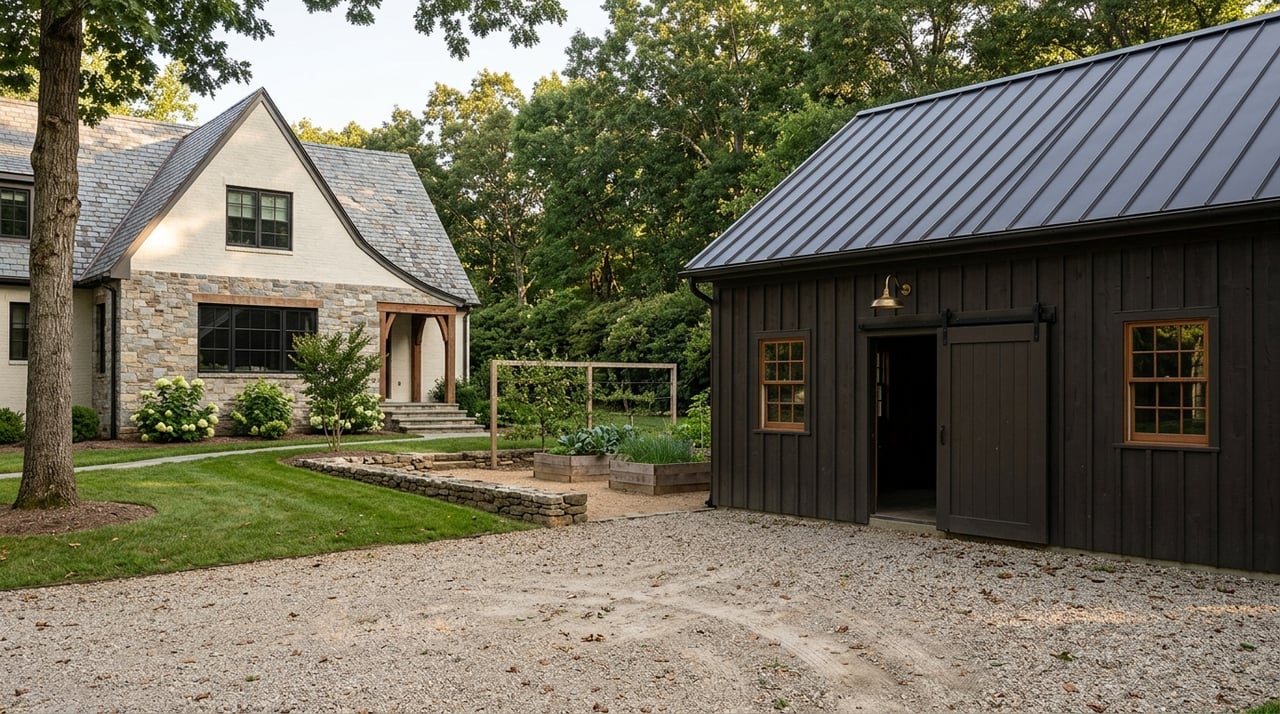
If you are dreaming about a few chickens, a big garden, a barn, or room for horses, Fairview gives you more than one path to get there. Some parcels are sized for a simple homesite with extra elbow room, while others already look and function more like small farms. The key is knowing how to match your vision to the land, the layout, and local approvals before you buy. Let’s dive in.
Fairview Land Offers Flexible Options
Fairview’s current land inventory shows a wide range of parcel sizes, from small lots under an acre to tracts above 20 acres. Representative active listings include parcels around 0.13, 0.33, 0.7, 1.49, 2.3, 5.85, 10.1, 14, 20.2, and 25.82 acres. That range matters because it means your idea of a homestead or hobby farm does not have to look just one way.
Some Fairview properties are geared toward building a home with a little extra outdoor space. Others already include features that support rural use, such as barns, fenced acreage, pasture, springs, stables, or multiple cleared areas. In practical terms, Fairview can work for both a modest setup and a more established farm-style property.
Start With Your Real Goals
Before you focus on acreage, get clear on what you want the property to do for you. A garden, orchard, chickens, goats, horses, or a mixed-use setup all place different demands on the land. The right parcel for one buyer may be the wrong fit for another, even if the acreage is the same.
North Carolina agriculture officials note that a farm is land cultivated for agricultural production. They also reference USDA small-farm guidance that includes operations at 179 acres or less or with gross income of $50,000 or less. For many buyers in Fairview, that means a hobby farm or homestead can take shape on a relatively manageable parcel if the usable land and infrastructure line up with the plan.
NC State Extension also recommends defining your goals early, choosing an enterprise that fits the land and available infrastructure, and starting small before expanding. That advice is especially useful in Fairview, where mountain terrain can make a property feel very different from what the total acreage suggests.
Look Beyond Acreage in Fairview
Acreage is only the starting point. In Fairview, listing descriptions often highlight wooded surroundings, mountain views, creek frontage, gentle slopes, paved access, and multiple build sites. Those features shape how the land will actually function day to day.
A 10-acre property is not automatically more usable than a 5-acre one. Steep areas, drainage patterns, driveway challenges, and narrow building envelopes can limit where you place a house, barn, garden, paddock, or equipment shed. A smaller parcel with easier access and better layout may support your plans more efficiently.
Usable Ground Matters Most
When you walk a parcel, pay close attention to how much of it feels workable. Think about where a home could sit, where you would place animal shelter, and how you would move between those areas in all seasons. If the best parts of the land are disconnected or difficult to reach, your daily routine may become harder than expected.
Mountain Features Can Be a Plus
Fairview’s wooded settings and mountain views are a major part of the appeal. Creek frontage, gentle slopes, and paved access can also add real value when you are planning a rural property. The goal is not to avoid mountain land features, but to understand how they support or limit your intended use.
Plan for Water, Soil, and Drainage
Water is one of the first things to think through on any homestead or hobby farm property. NC State Extension notes that water may be needed for irrigation, livestock, cleaning, hygiene, and crop protection. That means you should look past the scenic quality of a property and ask how water will actually reach the areas where you need it.
Soil and sun exposure matter too. Extension guidance notes that full sun and good soil are important for many plant-production setups. If gardening or small-scale crop production is part of your vision, those conditions deserve as much attention as the view from the future porch.
Buncombe County NRCS soil-survey materials add an important reminder. Soil data are useful for planning, but they do not replace onsite sampling, testing, or detailed study of the specific property. Online maps can help you start the conversation, but they should not be the final word.
Drainage Shapes Daily Use
Topography and drainage influence more than where water goes after a storm. They affect animal housing, muddy areas, work zones, and how comfortably you can move equipment or supplies across the property. A parcel that looks beautiful in listing photos may still require careful planning to avoid ongoing maintenance headaches.
Design the Layout Early
A strong layout makes a small homestead easier to run and a larger hobby farm more efficient. NC State Extension recommends thinking through water access, fencing, livestock housing, foraging areas, and traffic patterns for people, vehicles, and animals. In other words, the best setup is not only about what fits on the land, but how the parts work together.
You will also want to think ahead about storage. Feed, hay, tools, equipment, fuel, and chemicals all need designated space. Planning those needs early often creates a cleaner, safer, and more functional property than trying to add everything later.
Match Fencing to the Animals
Fence design depends on the species you want to contain. Extension guidance specifically notes that poultry, goats, and deer require different approaches. If livestock is part of your plan, fencing should be part of the first draft of your site plan, not an afterthought.
Place Gates and Barns for Workflow
Gate width, equipment access, and travel routes matter more than many buyers expect. A barn or shed may fit on paper, but if you cannot easily reach it with a trailer, feed delivery, or basic maintenance equipment, the layout can become frustrating fast. Shelter placement should also protect animals from weather and predators while supporting an efficient routine.
Verify Buncombe County Rules Early
This is one of the most important parts of buying rural land in Fairview. Buncombe County’s zoning ordinance applies to the parts of the county shown on the official zoning map and is intended to support orderly development and property values. The ordinance also says it will not regulate or deter a bona fide farm and its related uses, though non-farm uses on the same property may still be subject to the ordinance.
County zoning staff note that a zoning permit is required before a building permit for land in a zoning district or overlay district. Open Use parcels with no overlays may not need one for certain development. Some uses may also require special use permits, while variances are limited exceptions.
That means you should verify the property’s zoning status, overlay status, and intended use before you assume a barn, guest structure, or other improvement will be straightforward. Accessory buildings are broadly allowed across many zoning districts, but setbacks, structure size, district standards, and overlay rules still matter.
Check Access, Driveway, and Land Disturbance Rules
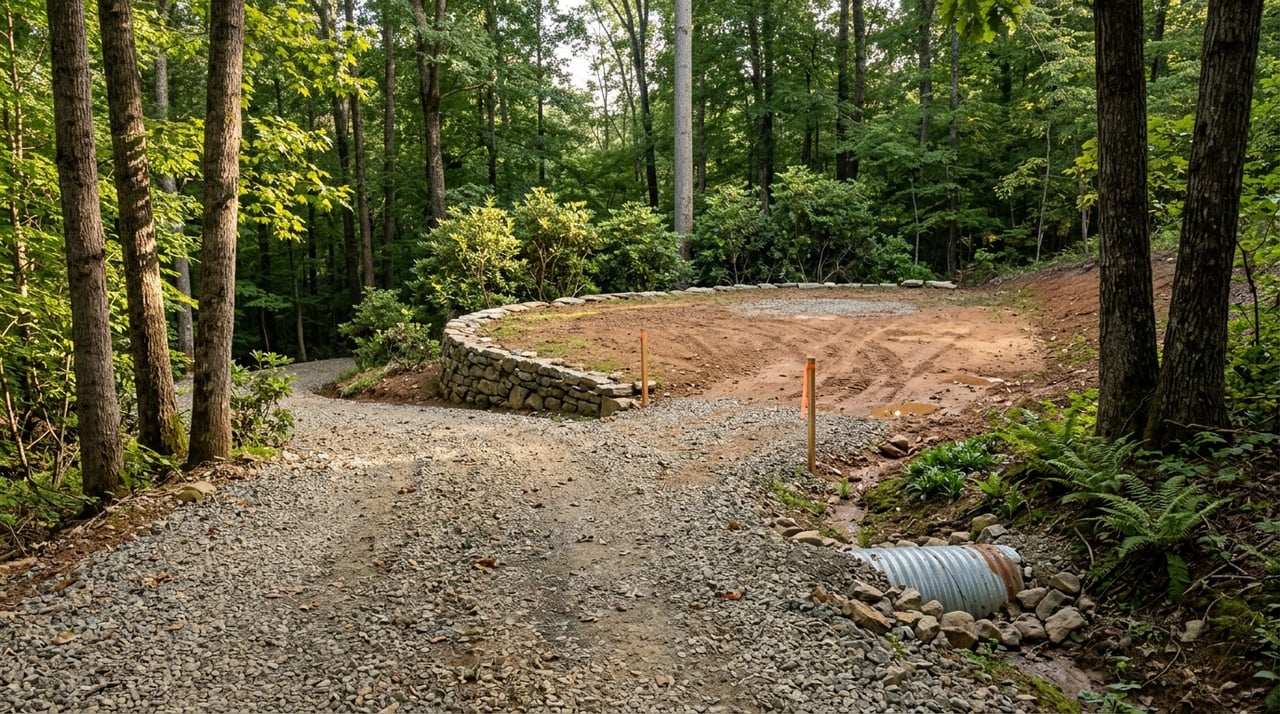
Driveway planning can be more complex than it first appears. If the parcel fronts a state-maintained road, NCDOT access standards may affect driveway location, design, and drainage. What looks like a simple entrance on a map may require additional review.
Buncombe County also requires erosion-control approval for land disturbance of one acre or more, and for one-quarter acre or more in hillside subdivisions. The county further notes that land disturbance under one acre is regulated in steep-slope, high-elevation, and protected-ridge overlay areas. In practical terms, a driveway cut, house pad, or barn site can trigger review even on a project that feels relatively small.
Understand Septic and Well Requirements
If public sewer is not available, Buncombe County Environmental Health says the owner must obtain an approved wastewater system. A building permit will not be issued until Authorization to Construct is issued for the septic system. For many rural parcels in Fairview, this is a critical early checkpoint.
The county also requires a well permit before drilling a private well. It suggests obtaining an Improvement Permit before investing in a building lot when sewer is unavailable. Improvement permits are valid for at least five years, and the application requires the parcel ID and a plat.
For buyers, that translates into a simple lesson: do not assume that a parcel is ready for your plan just because it is beautiful or marketed as buildable. Septic feasibility, well planning, and the timing of approvals can shape both your budget and your timeline.
Use Online Tools, Then Confirm Locally
Online research is helpful, but it should be the beginning of your process, not the end. Buncombe County’s GIS page says map data are refreshed daily on weekdays, but the county does not guarantee uninterrupted or error-free service. That is a useful reminder for any buyer comparing parcels from a laptop.
The best next step is to pair online review with local confirmation. Verify the parcel on GIS, then confirm zoning, septic, well, access, and land disturbance requirements with county staff. Depending on the property, you may also need input from a surveyor, engineer, or Extension specialist.
A Smart Fairview Buying Approach
If you are planning a homestead or hobby farm in Fairview, the strongest approach is usually the simplest one. Start with your real goals, measure them against usable land rather than total acreage, and verify the local approvals that matter most. That process helps you buy with confidence and avoid expensive surprises later.
Fairview offers a broad mix of land, from compact homesites to larger tracts with barns, pasture-like acreage, and multiple build areas. With the right due diligence, you can find a property that supports the lifestyle you want and the practical rhythm required to make it work.
If you want help evaluating land in Fairview through both a lifestyle and site-planning lens, connect with Kim Gentry Justus at Christie's International Real Estate for a curated consultation.
FAQs
What parcel size works for a hobby farm in Fairview?
- Fairview listings currently range from sub-acre lots to tracts above 20 acres, so the right size depends on your goals, usable land, and planned infrastructure rather than acreage alone.
What should buyers check before buying homestead land in Fairview?
- You should confirm zoning, overlay status, driveway access, septic feasibility, well permitting, drainage, and how much of the parcel is actually usable for your intended setup.
Do Buncombe County rules allow barns and accessory buildings on rural land?
- Buncombe County broadly allows accessory buildings in many zoning districts, but setbacks, structure size, district standards, and overlay rules still need to be verified for the specific parcel.
Does a buildable Fairview lot always support a homestead plan?
- No. A parcel may still require septic approval, a well permit, driveway review, erosion-control approval, or a more careful site layout before it can support your intended use.
Why does slope matter when planning a Fairview hobby farm?
- Slope affects drainage, building areas, fencing, animal housing, equipment access, and daily workflow, which is why usable terrain matters just as much as total acreage.